The insurance industry has long been criticized for being slow, confusing, and impersonal.
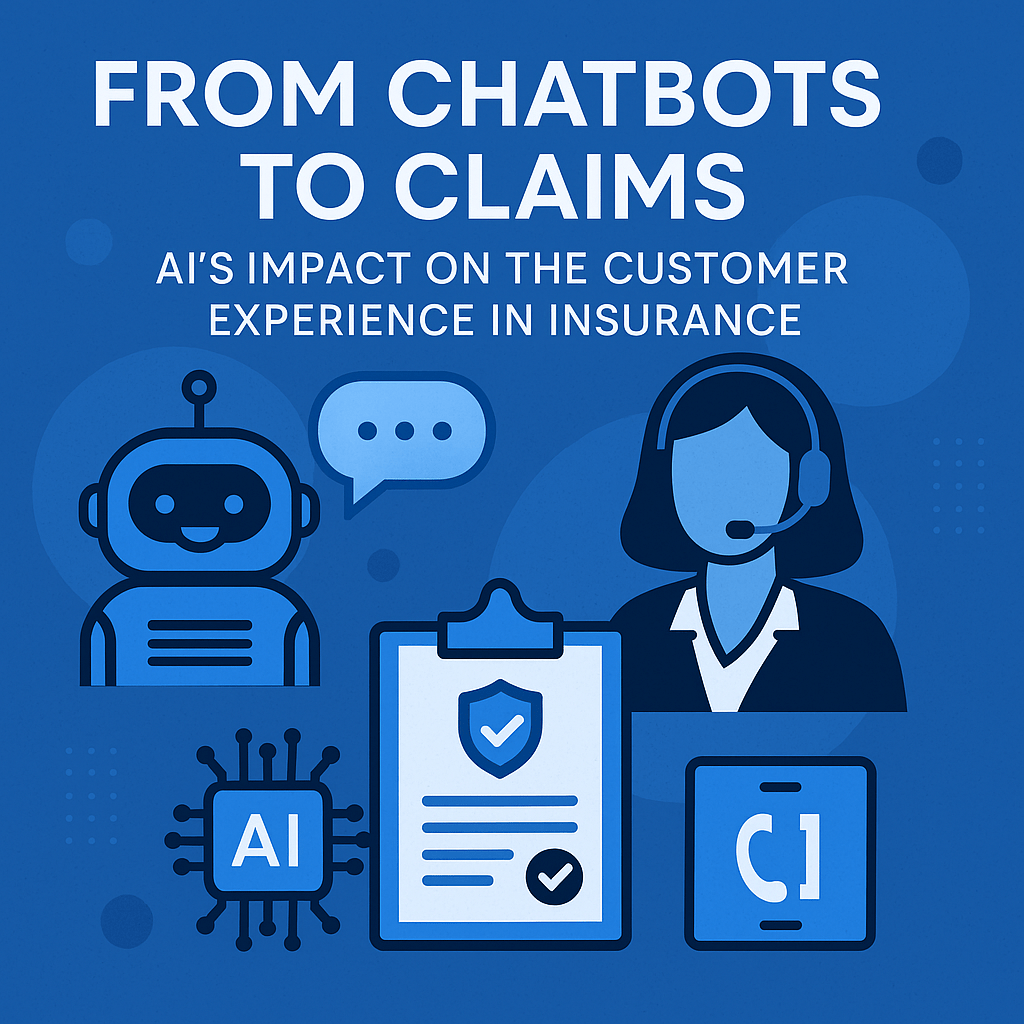
But artificial intelligence (AI) is rapidly changing that — transforming every touchpoint in the customer journey. From chatbots that answer questions instantly to intelligent systems that process claims in hours (not weeks), AI is redefining how insurers interact with policyholders.
In 2025, customer experience (CX) is no longer a “nice-to-have” — it’s a business imperative. And AI is at the center of this revolution.
Chatbots: The New Front Line of Customer Support
Gone are the days of long hold times or waiting for an email reply. AI-powered chatbots and virtual assistants now serve as the first point of contact for many insurers, offering 24/7 support through websites, mobile apps, and even voice assistants.
Lemonade’s “Maya” can quote and bind a renters policy in under 90 seconds.
GEICO’s “Kate” provides voice-enabled assistance through their app.
These bots use Natural Language Processing (NLP) to understand questions and deliver personalized answers.
Impact:
Customers get faster responses, reduced frustration, and support outside of business hours — leading to higher satisfaction scores and lower operational costs.
Personalized Policy Recommendations
AI doesn’t just respond — it predicts. By analyzing customer data (age, location, driving history, claims, preferences), AI can recommend policies tailored to individual needs.
AI-driven onboarding tools help customers pick the right coverage without jargon.
Smart suggestions encourage upsells or add-ons based on real needs — not hard selling.
This level of personalization was once possible with a human agent. Now, AI delivers it at scale, with greater speed and consistency.
Also read:
40 Benefits of Telegram channel
How to find lots of information about any topic?
Claims Processing: Fast, Fair, and Frictionless
Claims are the ultimate test of an insurer’s value. With AI, this once stressful process is becoming quicker and more transparent.
Image recognition tools assess damage from car or property photos.
ML models compare claims to historical patterns to detect fraud or fast-track approval.
Automated workflows reduce the need for manual intervention.
For example:
Lemonade claims some renters insurance claims are paid in 3 seconds using AI.
Zurich uses AI to process commercial claims 40% faster.
Result: Faster payouts, fewer disputes, and higher trust.
Predictive Engagement & Retention
AI doesn’t wait for a customer to ask questions. It can proactively reach out when:
- A policy renewal is due
- A customer may be underinsured
- There’s a weather alert that could impact the property
This predictive engagement creates a feeling of care and attentiveness, which drives loyalty.
The Human + AI Balance
While AI enhances speed and scale, empathy and complex problem-solving are still better handled by human agents.
The future is a hybrid model:
- AI handles routine, repetitive interactions
- Humans focus on sensitive or complex cases
This blend creates the best of both worlds: efficient operations and empathetic service.
Risks and Considerations
As insurers automate more of the customer journey, they must be mindful of:
- Bias in automated decision-making
- Tansparency: Can the AI explain its recommendations?
Maintaining customer trust requires clear communication, fair algorithms, and human backup when needed.
Conclusion
From chatbots to claims, AI is transforming insurance from a reactive service into a proactive, personalized experience. The companies that embrace AI wisely — balancing automation with empathy — will lead the industry in customer satisfaction and retention.
In the age of digital-first insurance, customer experience is the product. And AI is how it’s delivered.
 FreeMur